
Retrieval starts before generation
Choose an Embedding Server for Private Retrieval
Embedding services turn approved content and queries into vectors. Speed matters, but only after the resulting retrieval passes a versioned question set.

Workload before hardware
Describe the queue, the quality bar and the operating owner.
- 01 / Work unit
- Size from model, context, concurrent users and peak demand.
- 02 / Acceptance
- Agree quality, latency, citation or output checks before buying.
- 03 / Operations
- Plan updates, monitoring, support and a fallback route.
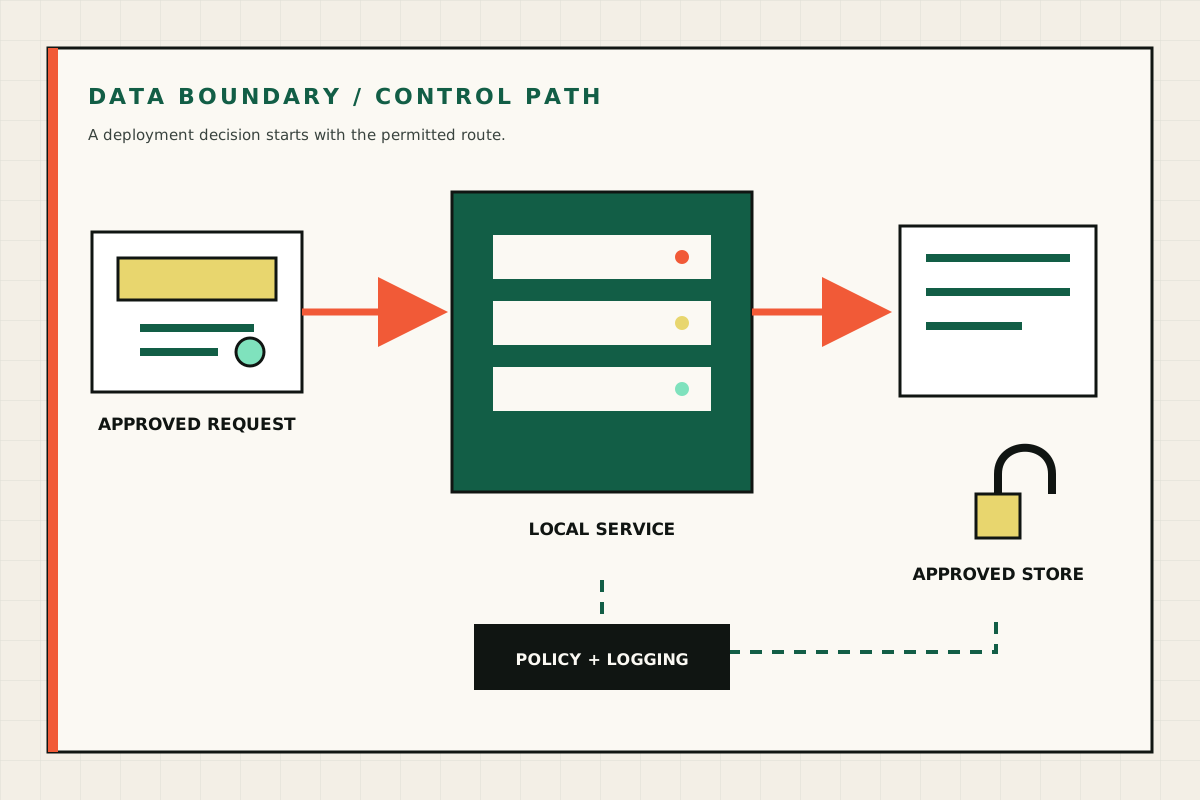
Pin the embedding identity
Record checkpoint, revision, dimensions, input limits and normalisation.
Changing the model can require rebuilding the index and revalidating retrieval.
Demand shape
Peak demand can matter more than the daily average
- Work unit
- Tokens, frames, files or jobs.
- Duration
- How long one active job occupies capacity.
- Concurrency
- How many jobs overlap.
- Deadline
- Interactive response or queued completion.
Trace the work before sizing the capacity.
The queue, memory shape, data path and management route turn a broad workload name into a testable service.

Measure retrieval quality
Use recall, ranking or task-specific evidence against known relevant passages.
Vectors per second alone cannot show whether the correct evidence is found.
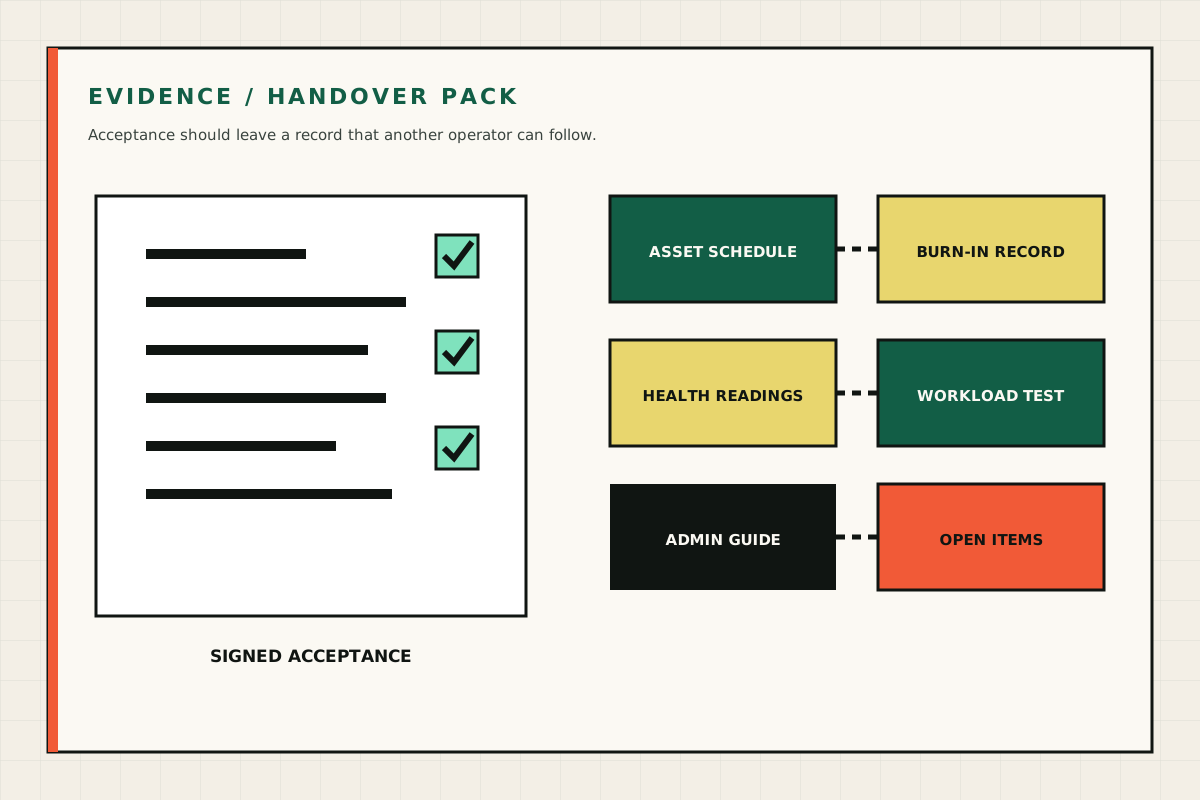
Acceptance bench
Quality and service conditions pass together
Separate ingestion and query demand
A periodic corpus rebuild is a batch workload; user searches are latency-sensitive.
They can run at different times or on different workers.
Operating loop
The workload continues after the first demonstration
- Observe Demand, errors and resource state.
- Review Quality drift, access and incidents.
- Change Versioned model or runtime update.
- Retest Focused acceptance before wider use.
Control the vector store
Permissions, tenant separation, deletion, backup and metadata are part of the service.
Hosted vector services remain a valid alternative when their controls and economics fit.
Questions answered
Straight answers to common questions
Do embeddings need a large GPU?
Not necessarily. The exact model, throughput and latency determine whether CPU, one GPU or shared capacity is proportionate.
Can we change embedding models later?
Yes, but existing vectors may need to be regenerated and retrieval quality retested.
Are vectors anonymous?
Do not assume so. Treat vector data and metadata according to the source content and threat model.
Continue the decision
Useful next steps
Next decision
Turn this guidance into a testable requirement.
The brief asks about workload and operating conditions - not just budget.
Decision check
Embedding Server: Define the Accepted Result
For embedding server, define the accepted output, data route, demand pattern and operating owner before hardware.
The acceptance plan for embedding server should state the test set, pass condition, fallback and outstanding limits.