Converting Crypto-Mining GPU Hardware to AI Inference
Assess whether former crypto-mining GPU hardware can become useful AI capacity, including compatibility, memory, host, cooling, security and benchmark gates.

Buyer’s reading room
Begin with the decision in front of you. Check sources, dated commercial inputs and outstanding hardware questions before relying on a recommendation.
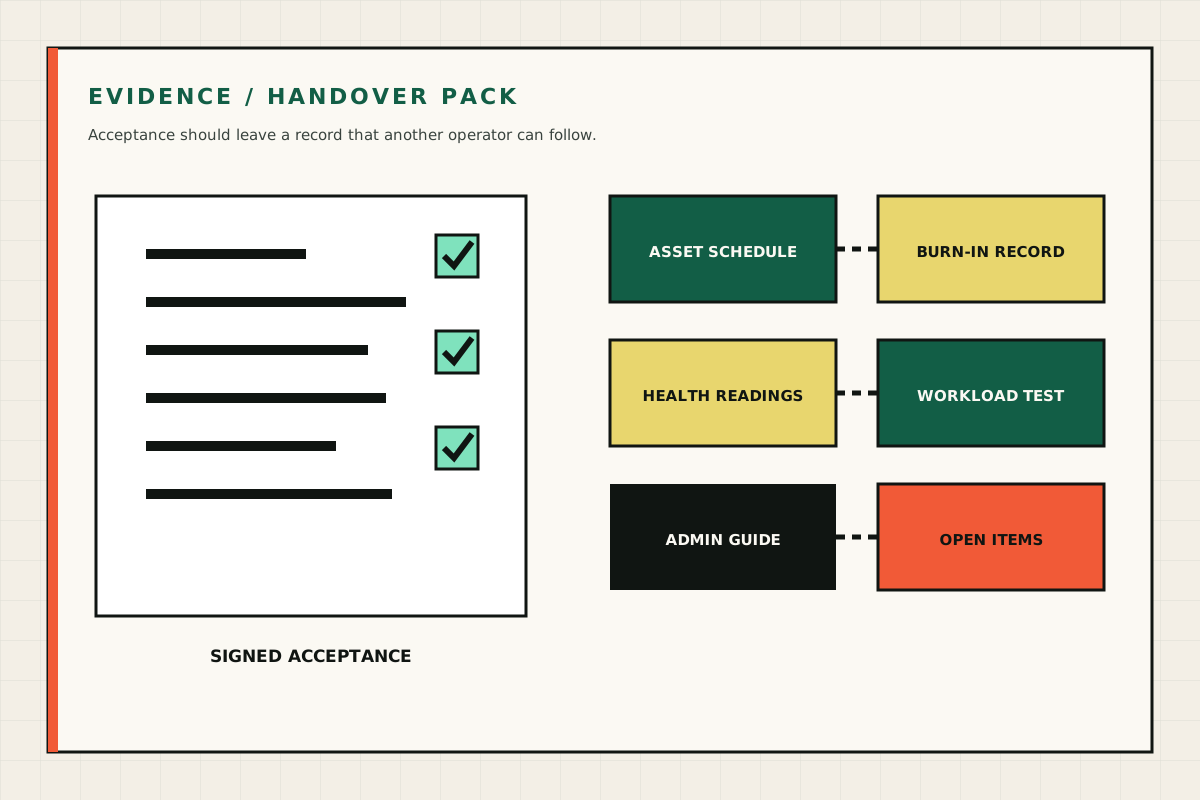
Help and information centre
Follow a learning path or open the topic group that resolves the current uncertainty. Review dates identify when prices, rules and software versions need checking again.
Build the technical foundation before choosing a product: how old mining equipment translates to AI, where memory goes, what multi-GPU means and how serving optimisations change the result.
Assess whether former crypto-mining GPU hardware can become useful AI capacity, including compatibility, memory, host, cooling, security and benchmark gates.
Size GPU memory for a local LLM using model weights, quantisation, context, KV cache, concurrency and the difference between per-GPU and aggregate VRAM.
Understand time to first token, inter-token latency, throughput and concurrency so AI server benchmark figures describe a real service.
Understand aggregate VRAM, PCIe paths, NUMA placement, NVLink and NVSwitch before choosing a multi-GPU AI workstation or rack server.
Understand four AI inference optimisation techniques, what each changes and why benchmark conditions must remain visible.
Compare runtime routes, build a reproducible acceptance test and confirm the site before accepting a hardware recommendation.
Compare four inference runtime routes by checkpoint support, hardware, operations, API, optimisation and reproducible benchmark evidence.
Build an acceptance set, benchmark exact AI server configurations and choose by quality, latency, capacity, power, operations and evidence.
A practical UK buyer’s guide to private AI servers: workload, model fit, VRAM, power, security, supplier evidence, costs and the cloud alternative.
Plan a UK site for a GPU or AI server: circuits, kW, electricity, cooling overhead, heat, noise, racks, UPS and pre-delivery checks.
Use these notes to frame UK data-protection and capital-allowance questions. They point to primary sources and specialist advice, not a guaranteed treatment.
A practical guide to UK GDPR and private AI, covering lawful basis, data routes, DPIAs, rights, retention, security, accuracy and shared responsibility.
Guarded UK guidance on Annual Investment Allowance, full expensing, leasing and why capital gains or R&D claims should not drive an AI server purchase.
Read this only after the business workload and operating costs stand on their own. Marketplace income is optional upside, never the base purchase case.
A guarded guide to renting spare business GPU capacity through Vast.ai, Render or decentralised compute networks, including revenue, security and cost gates.
Before relying on a guide
Regulatory, platform and technical claims can change after the stated review date.
Energy, prices and exchange rates are snapshots. Replace them before a purchase decision.
A package, image or reference configuration does not prove performance. Confirm the exact build with a recorded acceptance test.
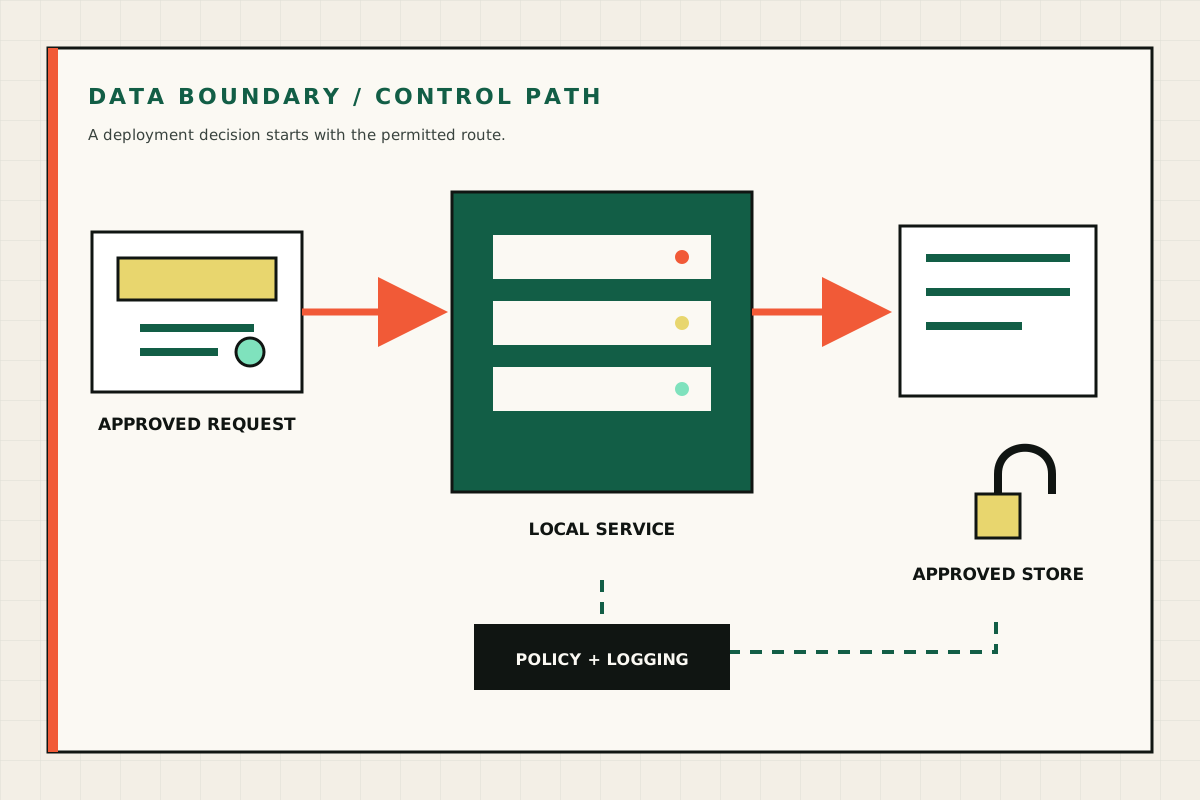
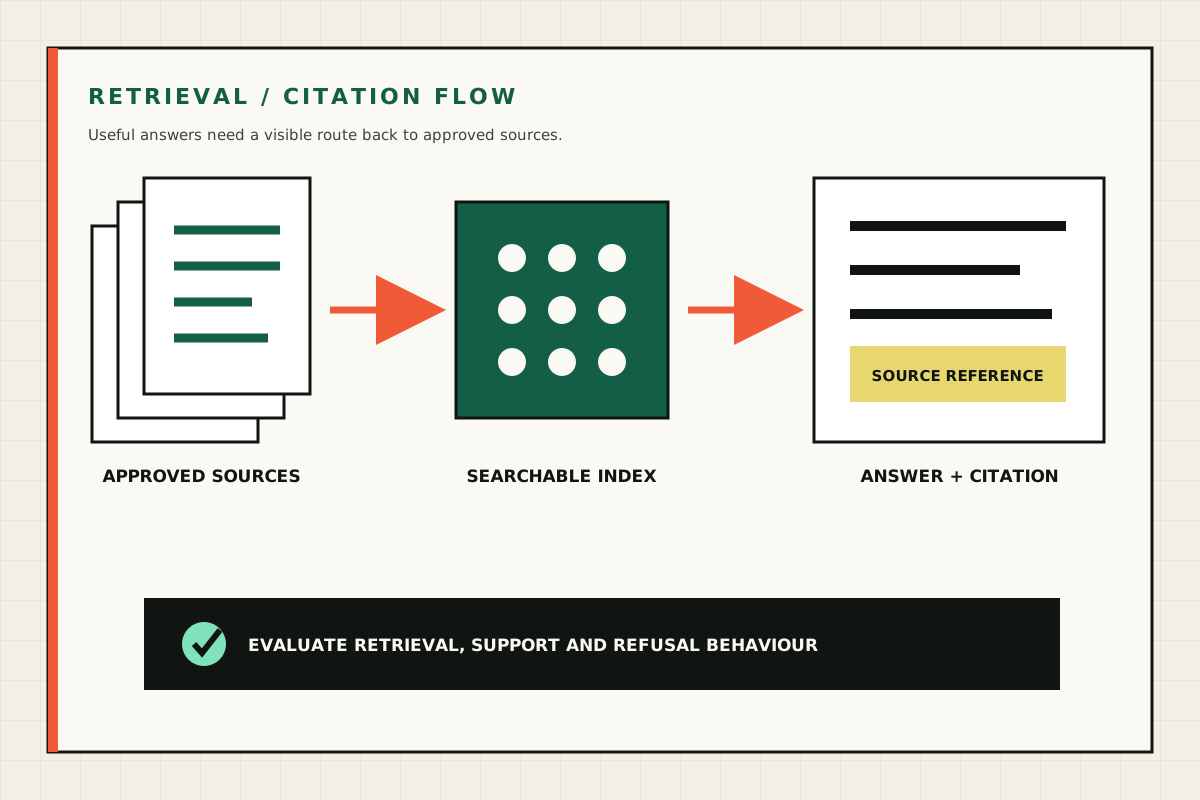
Check how the room, hardware, management interface and application data path affect the design. Supplier reference images and technical illustrations are labelled separately.


Decision check
When assessing GPU server guides, start with the real workload, operating boundary, available evidence and credible alternatives.
Relevant supporting considerations include GPU server buying guide, AI server guides and private AI deployment. A sound GPU server guides decision should make inputs, limitations, responsibilities and the next practical check clear.
Privacy & cookies. Google Analytics measures site use so we can improve it. Read our Cookie Notice and Privacy Notice. To object, disable cookies in your browser.