
Keep product knowledge and technical IP in a controlled route
Choose an AI Server for Engineering Companies & Manufacturing
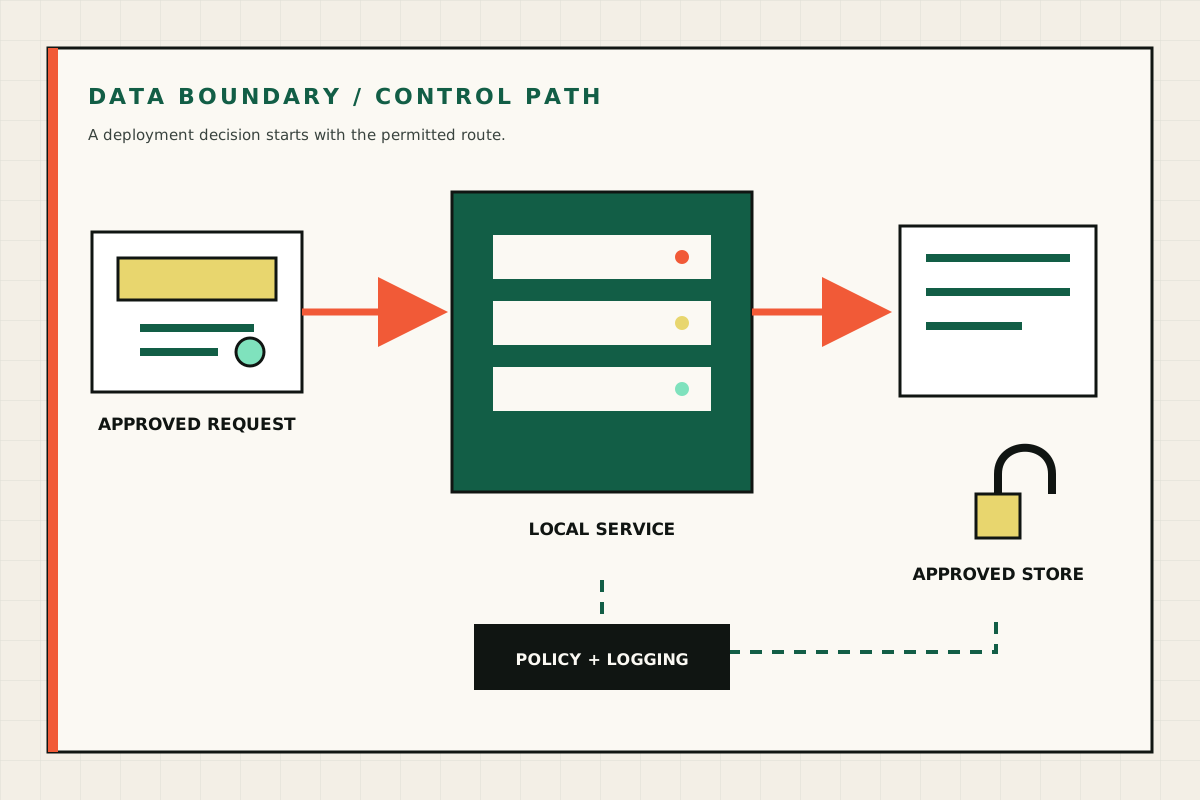
Engineering teams hold designs, manuals, source code, test records and process knowledge that may not belong in a public AI workflow. A local service can support retrieval and analysis while preserving a defined data route.
Sector fit
Start with duties and data boundaries, then test one useful workflow.
- 01 / Duty
- Map confidential data, professional duties and approvers first.
- 02 / Pilot
- Use one bounded workflow and representative, permitted material.
- 03 / Control
- Retain human review, access ownership and an evidence trail.
Useful technical workflows
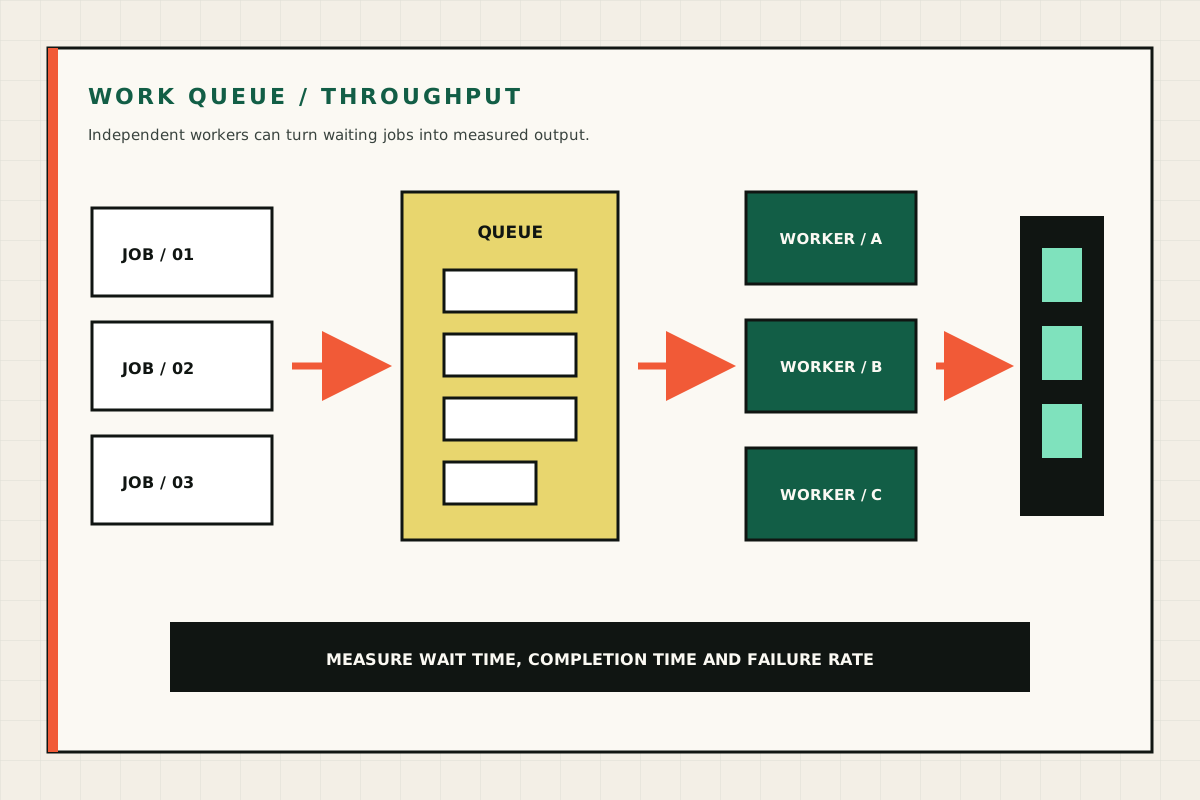
Manual and standards search, fault-history retrieval, code assistance, document classification, report drafting, visual inspection support and render queues are candidates.
Each workflow needs a measurable test and source owner.
Human checkpoint
Automation stops before the accountable decision
- Assist Search, extract, classify or draft.
- Cite Show the evidence used where applicable.
- Review Authorised person checks the result.
- Decide Accountable role accepts or rejects.
Keep the operating boundary in view.
Map data access, professional review and accountability before a sector pilot begins.

Version and configuration matter
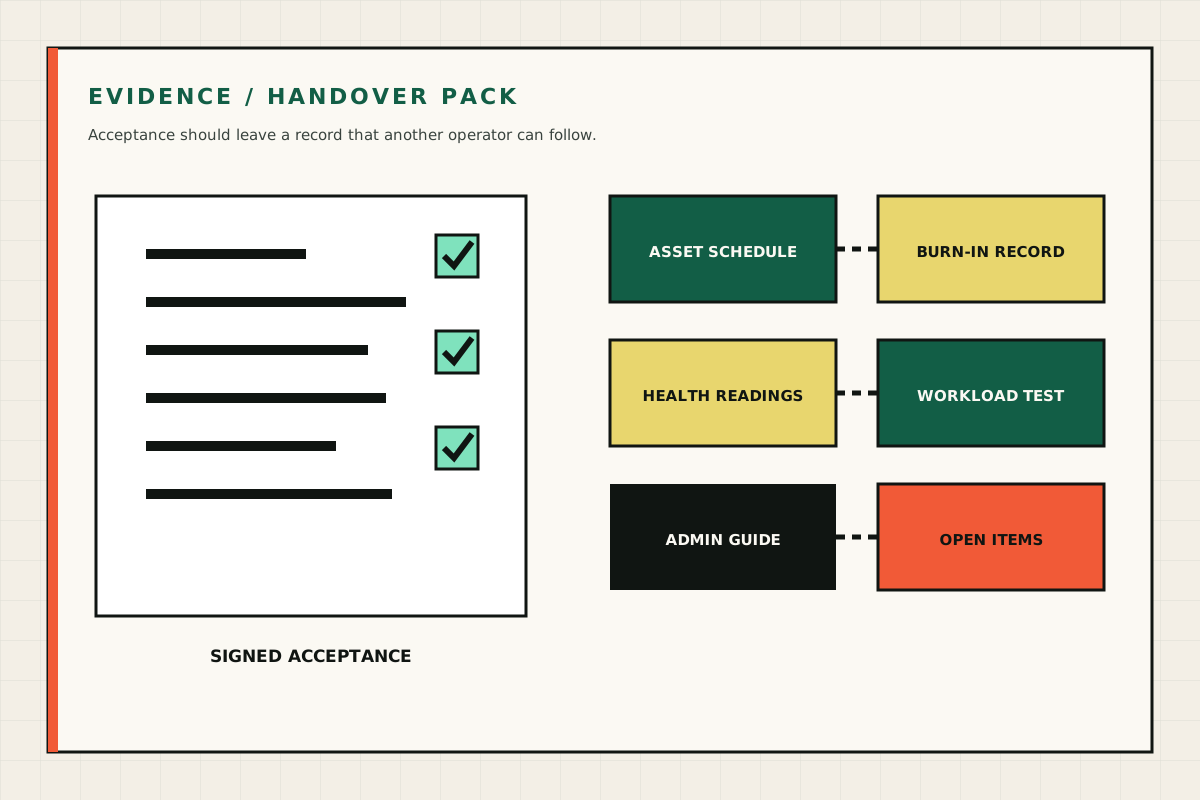
The answer must cite the correct drawing, revision or procedure. Retrieval should not silently mix obsolete and current documents.
Model and software versions are similarly pinned in the appliance record.
Assurance layers
A sector deployment needs more than a plausible demonstration
- Defined scope
- Named workflow, material and owner.
- Bounded pilot
- Permitted material and pass conditions.
- Witnessed result
- Conditions and reviewer recorded.
- Approval
- Operating scope agreed in writing.
Facility fit can be an advantage
Engineering and manufacturing sites may already have rack, power, ventilation and technical support capability.
The same pre-flight still records circuits, heat, network, physical access and production impact.
Pilot record
Keep the first deployment deliberately narrow
- Owner Data, process and technical roles named.
- Material Representative and permitted scope.
- Boundary Decisions the service may not make.
- Expansion Evidence required before wider use.
Edge and server roles are different
A departmental GPU server can prepare or serve models; an edge device may run a bounded inference task near equipment.
The architecture should not assume a rack server directly controls a safety-critical process.
Questions answered
Straight answers to common questions
Can the server read technical drawings?
Multimodal workflows can be tested, but file formats, model capability and required accuracy need a representative proof.
Can it run computer vision?
Suitable GPUs can support agreed vision inference or batch work. Camera integration and production controls require separate scope.
Is it suitable for safety-critical control?
No general safety-critical certification or autonomous-control claim is made.
Continue the decision
Useful next steps
Next decision
Turn this guidance into a testable requirement.
The brief asks about workload and operating conditions - not just budget.
Decision check
AI Server for Engineering Company: Start With Duties & Data
Evaluate AI server for engineering company against the professional duty, permitted data, accountable owner and one bounded pilot.
A responsible AI server for engineering company plan should retain human review, access controls and evidence of the accepted result.