
Training needs a separate evidence record
AI Training Server: Fine-Tuning Sized by Method, Data & Evaluation
Adapter tuning and full training have very different memory and communication demands. The desired behavioural change and evaluation set come before a GPU count.

Workload before hardware
Describe the queue, the quality bar and the operating owner.
- 01 / Work unit
- Size from model, context, concurrent users and peak demand.
- 02 / Acceptance
- Agree quality, latency, citation or output checks before buying.
- 03 / Operations
- Plan updates, monitoring, support and a fallback route.
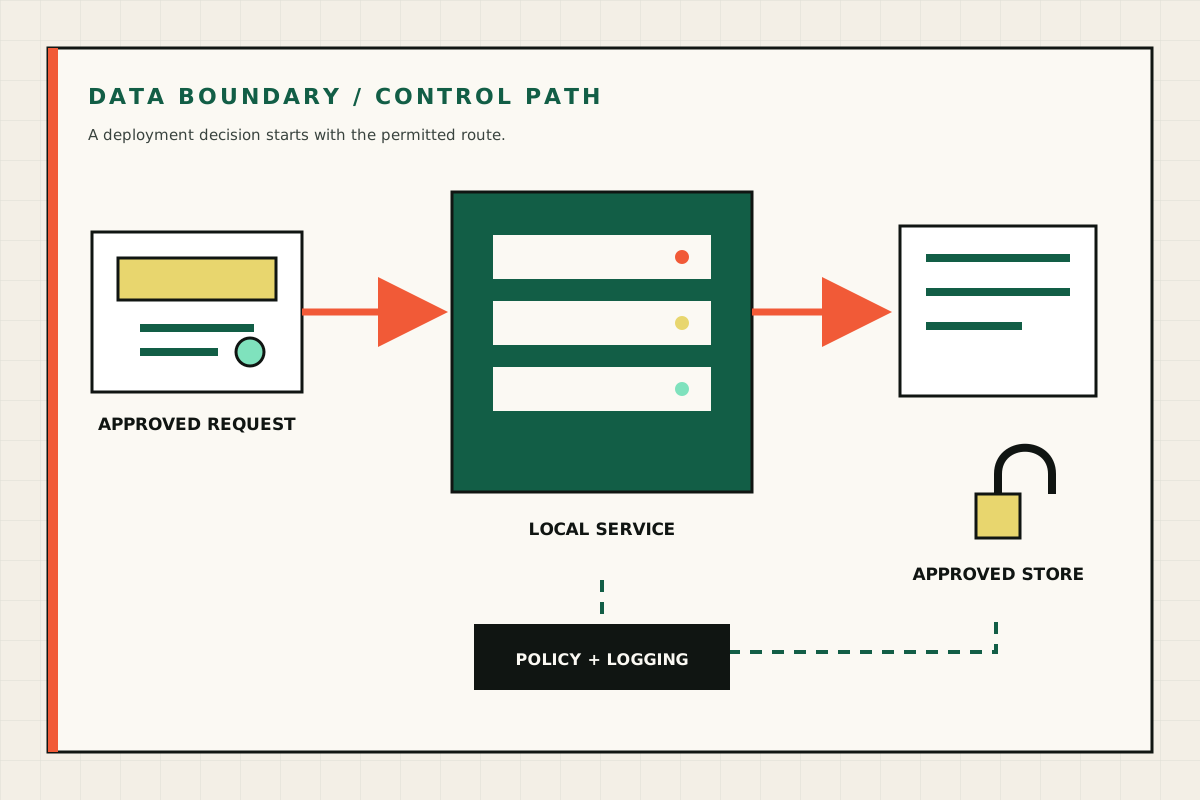
Name the training identity
Record base checkpoint, licence, immutable revision, trainable parameters, precision and optimiser.
A parameter count alone cannot predict training memory.
Demand shape
Peak demand can matter more than the daily average
- Work unit
- Tokens, frames, files or jobs.
- Duration
- How long one active job occupies capacity.
- Concurrency
- How many jobs overlap.
- Deadline
- Interactive response or queued completion.
Trace the work before sizing the capacity.
The queue, memory shape, data path and management route turn a broad workload name into a testable service.
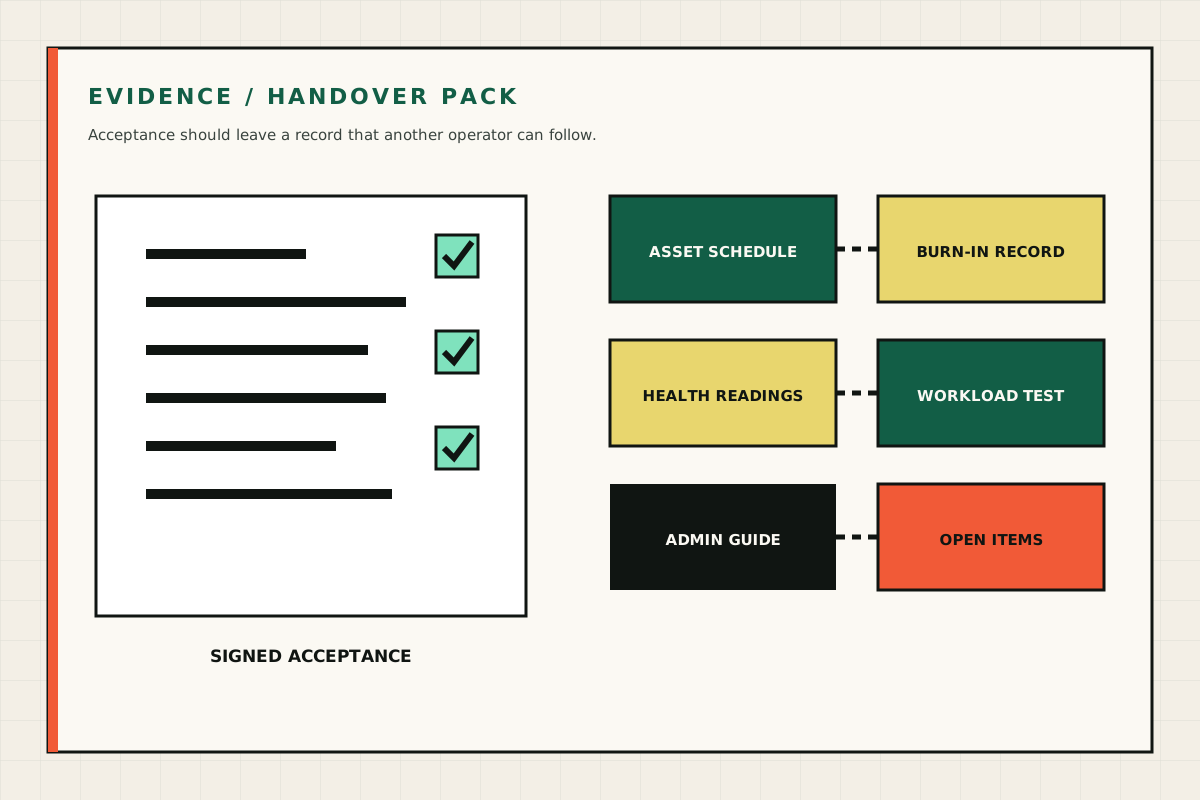

Control the dataset
Document provenance, permissions, quality, splits, retention and removal routes.
Sensitive examples need the same governance as any production data.
Acceptance bench
Quality and service conditions pass together
Measure learning and regression
Track loss and completed steps, then test held-out task quality, safety and unwanted regressions.
A completed run is not evidence of an improved model.
Operating loop
The workload continues after the first demonstration
- Observe Demand, errors and resource state.
- Review Quality drift, access and incidents.
- Change Versioned model or runtime update.
- Retest Focused acceptance before wider use.
Choose local or rented training
Local capacity can suit repeatable controlled work; rented clusters can suit infrequent large experiments.
Inference and training may justify different systems or schedules.
Questions answered
Straight answers to common questions
Can every listed system fine-tune models?
No universal claim is made. Exact method, checkpoint and memory need a fit record.
Is LoRA the same as full fine-tuning?
No. Adapter methods train a smaller parameter set and usually have different memory and operational requirements.
Does private training make the model compliant?
No. Governance depends on data, purpose, controls, licence and deployment, not location alone.
Continue the decision
Useful next steps
Next decision
Turn this guidance into a testable requirement.
The brief asks about workload and operating conditions - not just budget.
Decision check
AI Training Server: Define the Accepted Result
For AI training server, define the accepted output, data route, demand pattern and operating owner before hardware.
The acceptance plan for AI training server should state the test set, pass condition, fallback and outstanding limits.