
Keep approved audio in a controlled route
Choose a Speech-to-Text Server for Private Transcription
Local speech recognition can support meetings, calls, interviews and media. The result depends on language, accents, noise, channels and domain vocabulary.

Workload before hardware
Describe the queue, the quality bar and the operating owner.
- 01 / Work unit
- Size from model, context, concurrent users and peak demand.
- 02 / Acceptance
- Agree quality, latency, citation or output checks before buying.
- 03 / Operations
- Plan updates, monitoring, support and a fallback route.
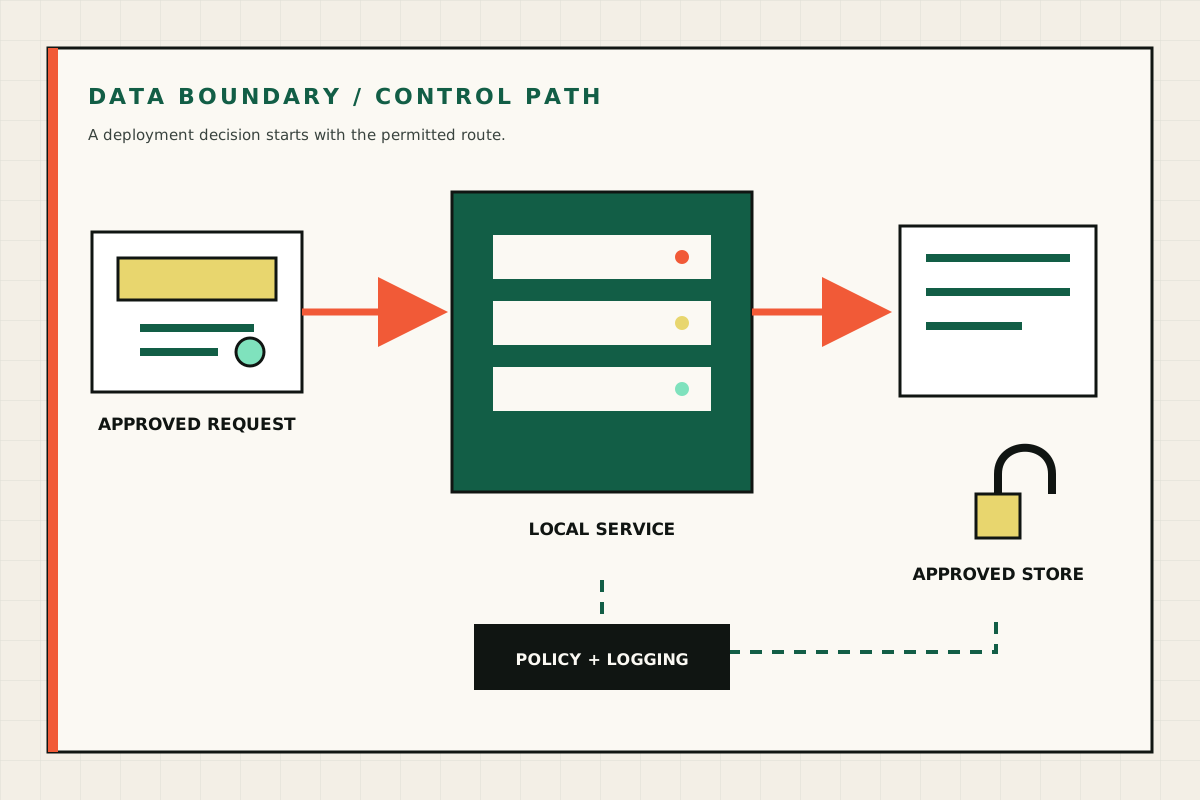
Build a representative audio set
Include real languages, accents, microphones, noise and overlapping speakers.
Record consent, retention and who may access audio and transcripts.
Demand shape
Peak demand can matter more than the daily average
- Work unit
- Tokens, frames, files or jobs.
- Duration
- How long one active job occupies capacity.
- Concurrency
- How many jobs overlap.
- Deadline
- Interactive response or queued completion.
Trace the work before sizing the capacity.
The queue, memory shape, data path and management route turn a broad workload name into a testable service.
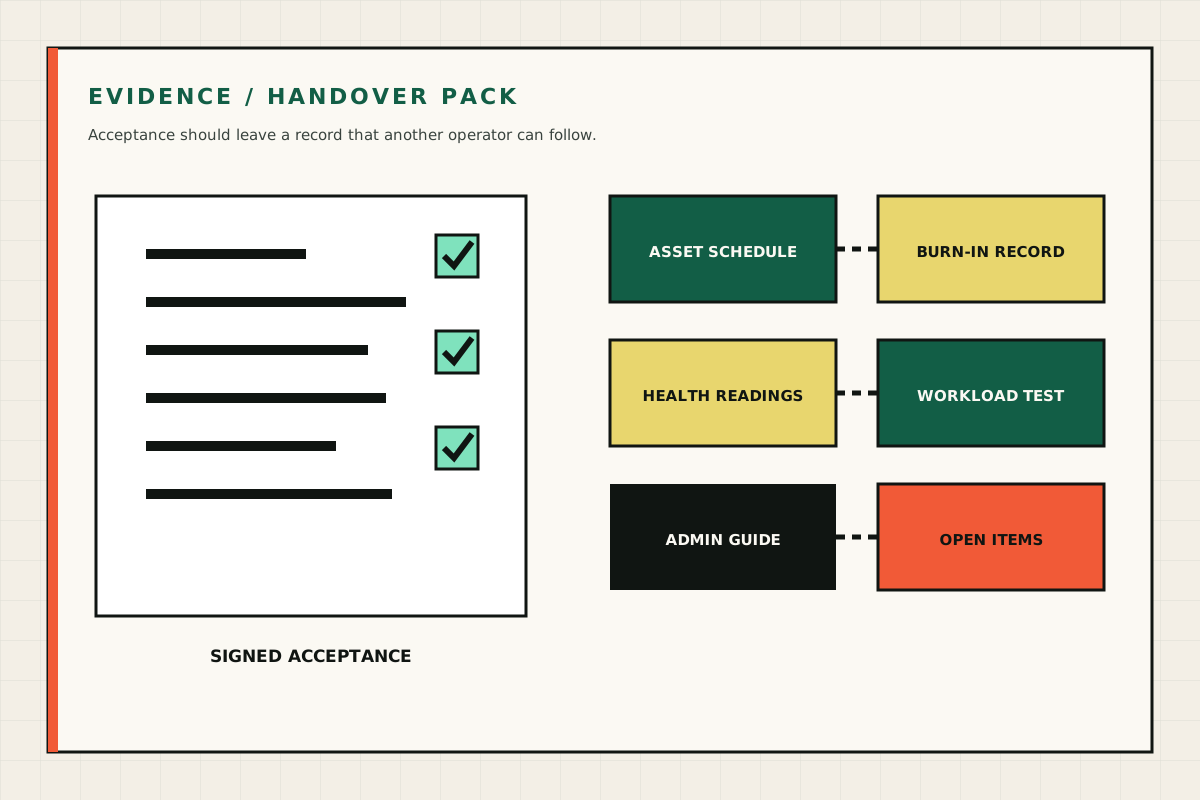

Measure error and speed
Report word error rate or a task-specific correction measure plus real-time factor and failures.
A fast transcript that changes names, figures or negation may be unusable.
Acceptance bench
Quality and service conditions pass together
Separate optional stages
Diarisation, punctuation, translation, summarisation and redaction are distinct components.
Each adds models, data handling and its own quality and performance test.
Operating loop
The workload continues after the first demonstration
- Observe Demand, errors and resource state.
- Review Quality drift, access and incidents.
- Change Versioned model or runtime update.
- Retest Focused acceptance before wider use.
Choose batch or live service
Live captions prioritise stable low latency; overnight archives prioritise completed audio per hour.
Hosted transcription can suit bursty work where policy and provider terms are acceptable.
Questions answered
Straight answers to common questions
Can it identify speakers?
Speaker diarisation can be evaluated, but it is a separate capability and not guaranteed by transcription alone.
Can it transcribe in real time?
A tested model and service can be assessed for live use against latency and error gates.
Will audio leave our network?
Not through a correctly configured local-only route; connectors, telemetry and fallbacks must also follow policy.
Continue the decision
Useful next steps
Next decision
Turn this guidance into a testable requirement.
The brief asks about workload and operating conditions - not just budget.
Decision check
Speech to Text Server: Define the Accepted Result
For speech-to-text server, define the accepted output, data route, demand pattern and operating owner before hardware.
The acceptance plan for speech-to-text server should state the test set, pass condition, fallback and outstanding limits.