
One platform, several GPU-intensive queues
Choose a Blender Render Server & GPU System for Creative VFX
Creative teams can combine local image, video, transcription, upscaling and rendering workloads on owned GPU workers. Queue design and storage can matter as much as model size.
Sector fit
Start with duties and data boundaries, then test one useful workflow.
- 01 / Duty
- Map confidential data, professional duties and approvers first.
- 02 / Pilot
- Use one bounded workflow and representative, permitted material.
- 03 / Control
- Retain human review, access ownership and an evidence trail.

Map work to workers
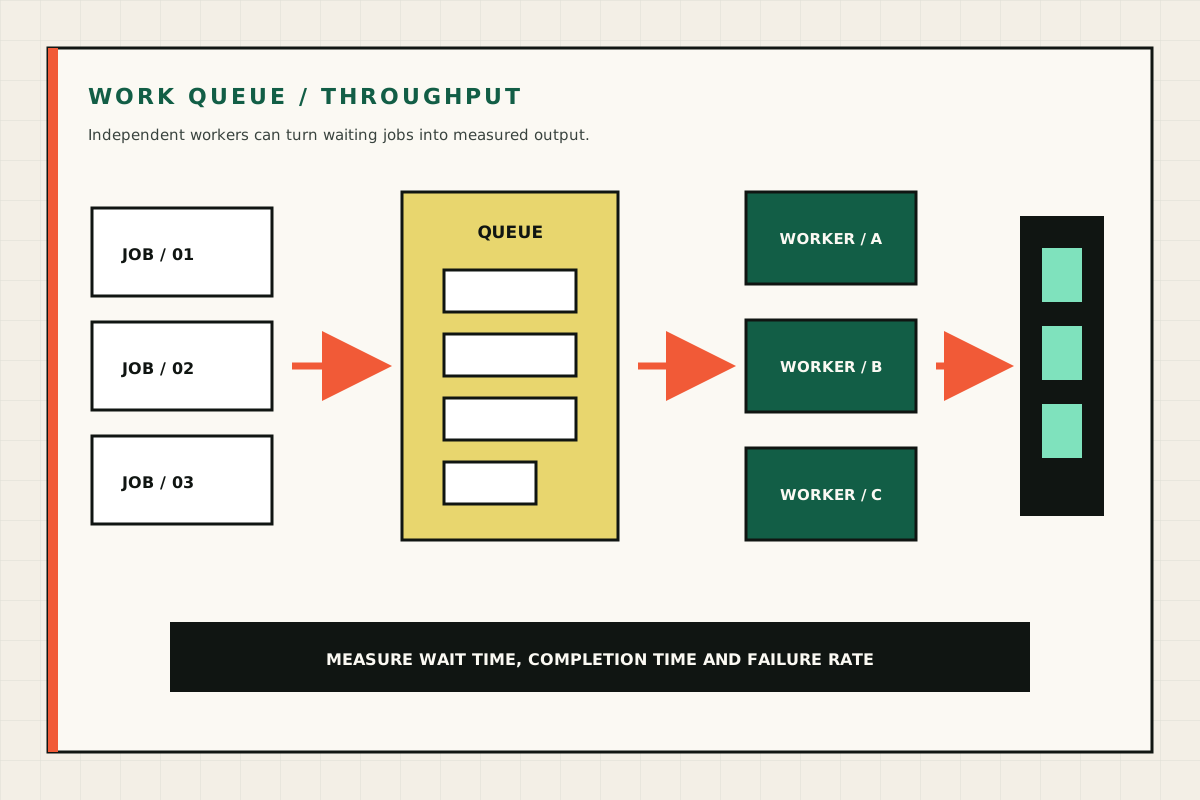
Separate GPUs can serve image generation, render frames, transcription or review models without forcing every job into one memory pool.
A scheduler and priority policy protect interactive work from long batch jobs.
Human checkpoint
Automation stops before the accountable decision
- Assist Search, extract, classify or draft.
- Cite Show the evidence used where applicable.
- Review Authorised person checks the result.
- Decide Accountable role accepts or rejects.
Keep the operating boundary in view.
Map data access, professional review and accountability before a sector pilot begins.

Storage and network are part of creative performance
Large source assets and outputs can overwhelm the default 4TB or 8TB local storage. Shared storage and faster networking may be required.
Those additions belong in the exact quote, not a generic “creative-ready” label.
Assurance layers
A sector deployment needs more than a plausible demonstration
- Defined scope
- Named workflow, material and owner.
- Bounded pilot
- Permitted material and pass conditions.
- Witnessed result
- Conditions and reviewer recorded.
- Approval
- Operating scope agreed in writing.
Power cost follows the queue
Measure loaded kW, job duration and completed useful work. Cooling and failed jobs change the economics.
A server can remain valuable for rendering even when a specific AI model changes.
Pilot record
Keep the first deployment deliberately narrow
- Owner Data, process and technical roles named.
- Material Representative and permitted scope.
- Boundary Decisions the service may not make.
- Expansion Evidence required before wider use.
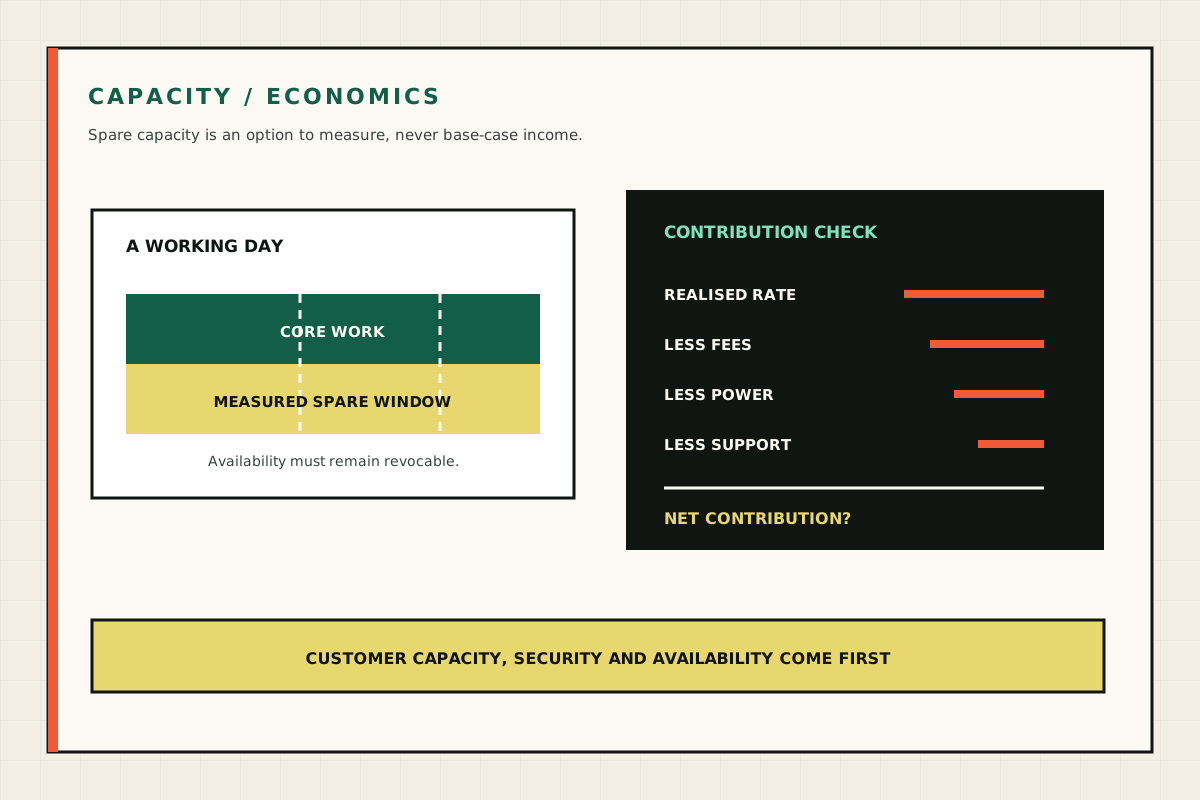
Marketplace income is secondary
Spare capacity may be evaluated for Render or other networks only after studio security, licences, warranty and production priority are protected.
No marketplace income is guaranteed or included in the purchase case.
Questions answered
Straight answers to common questions
Can the server run Blender rendering?
Suitable NVIDIA GPUs can run Blender workloads, subject to exact application, driver, scene and queue testing.
Can it generate images and video?
Agreed local models can be configured and tested. Model licences, VRAM and quality vary.
Can we rent the GPUs when idle?
Potentially through an isolated, opt-in pilot. Demand and contribution are not guaranteed and production work keeps priority.
Continue the decision
Useful next steps
Next decision
Turn this guidance into a testable requirement.
The brief asks about workload and operating conditions - not just budget.
Decision check
Blender Render Server: Start With Duties & Data
Evaluate Blender render server against the professional duty, permitted data, accountable owner and one bounded pilot.
A responsible Blender render server plan should retain human review, access controls and evidence of the accepted result.