
Give models less authority than they ask for
Run a Local AI Agent with Self-Hosted Workflow Automation
An agent combines a model with tools, state and a loop. The central sizing question sits beside a more important one: what may it do, and how is each action reviewed?

Workload before hardware
Describe the queue, the quality bar and the operating owner.
- 01 / Work unit
- Size from model, context, concurrent users and peak demand.
- 02 / Acceptance
- Agree quality, latency, citation or output checks before buying.
- 03 / Operations
- Plan updates, monitoring, support and a fallback route.
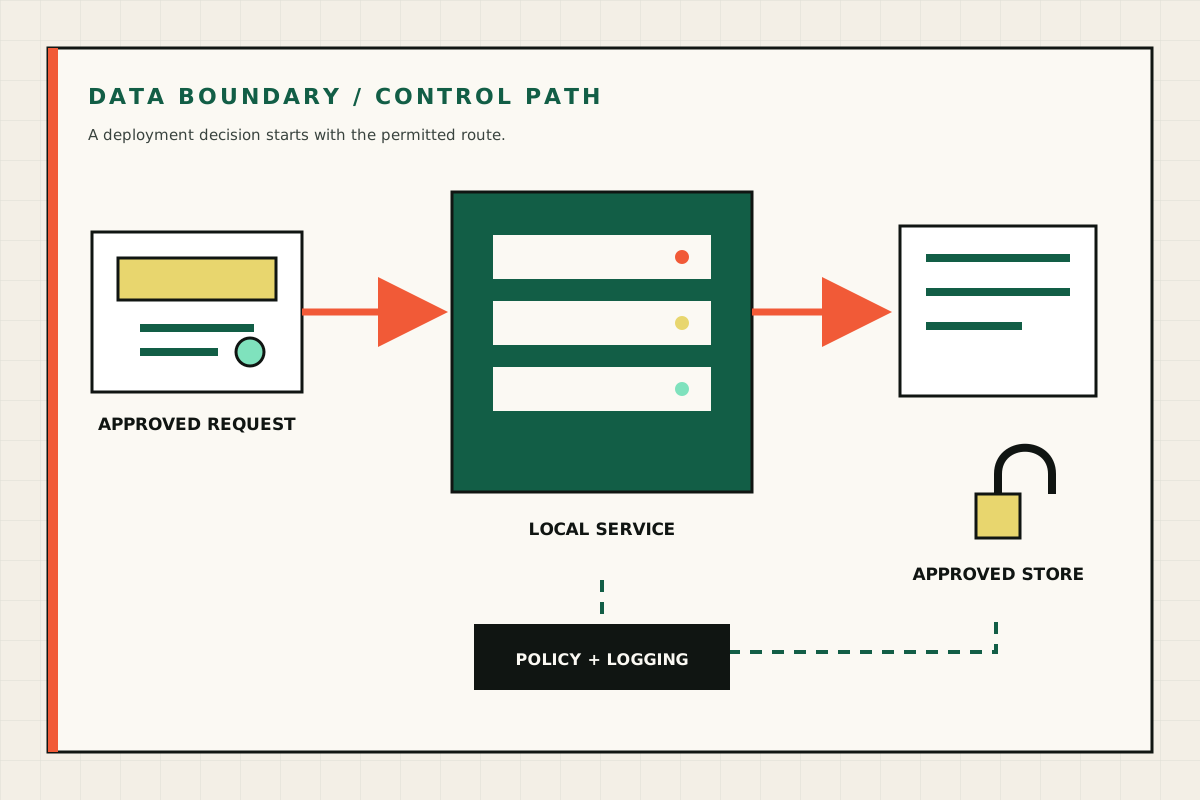
Define the action boundary
List every system, tool, credential, data source and permitted operation.
Use least privilege, allowlists and separate identities rather than a broad employee account.
Demand shape
Peak demand can matter more than the daily average
- Work unit
- Tokens, frames, files or jobs.
- Duration
- How long one active job occupies capacity.
- Concurrency
- How many jobs overlap.
- Deadline
- Interactive response or queued completion.
Trace the work before sizing the capacity.
The queue, memory shape, data path and management route turn a broad workload name into a testable service.
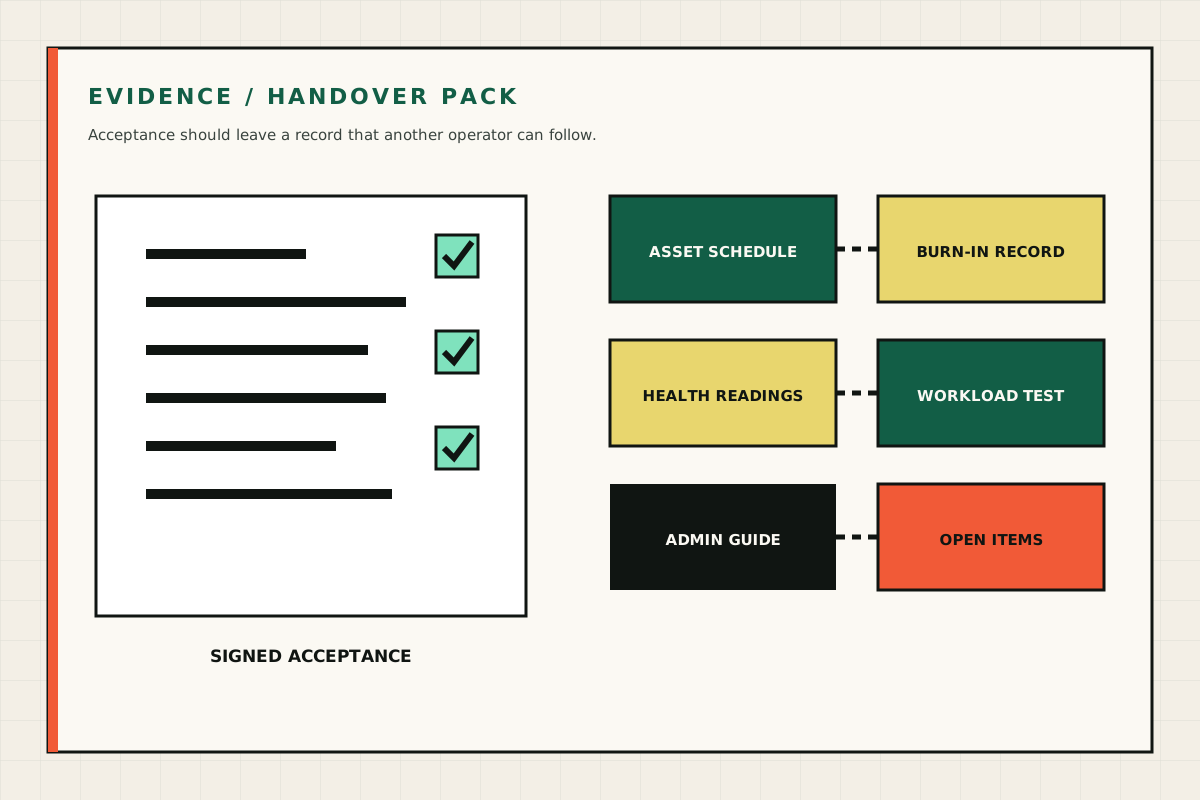

Evaluate task completion
Measure successful tasks, unsupported actions, retries, tool errors, time and reviewer effort.
A fluent plan is not a completed business outcome.
Acceptance bench
Quality and service conditions pass together
Control loops and spend
Set step, time, token and external-action limits with an observable stop route.
Prompt injection and malicious retrieved content belong in the test set.
Operating loop
The workload continues after the first demonstration
- Observe Demand, errors and resource state.
- Review Quality drift, access and incidents.
- Change Versioned model or runtime update.
- Retest Focused acceptance before wider use.
Size the whole system
Agent demand includes model calls, tool latency, retrieval, concurrent tasks and persistent state.
Hosted frontier models may remain appropriate for approved complex exceptions.
Questions answered
Straight answers to common questions
Can an agent send emails or change records?
Only after explicit scoped integration, least privilege, confirmation policy, logging and rollback are accepted.
Does local hosting stop prompt injection?
No. Local control changes the data route but does not remove malicious inputs or unsafe tool use.
Which server supports agents?
The model, tool pattern, concurrency and latency require an exact fit test; agent support is not a GPU specification.
Continue the decision
Useful next steps
Next decision
Turn this guidance into a testable requirement.
The brief asks about workload and operating conditions - not just budget.
Decision check
Local AI Agent: Define the Accepted Result
For local AI agent, define the accepted output, data route, demand pattern and operating owner before hardware.
The acceptance plan for local AI agent should state the test set, pass condition, fallback and outstanding limits. Include self-hosted operation, hosted operation and automation boundaries where those factors change the decision.